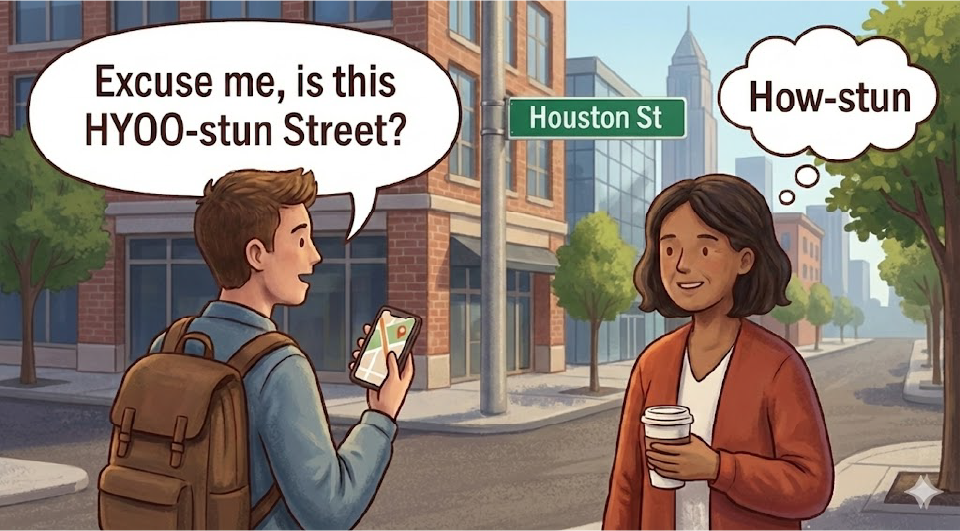
Words That Instantly Expose You as a Visitor
You are standing somewhere unfamiliar, but not lost. Maybe you are grabbing food, asking for directions, or making small talk. Everything feels normal. You say the name of a street, a neighborhood, or a place you have seen written down a hundred times. You say it confidently, because why would you not. It looks obvious.
There is a pause. Not an awkward one, just a small beat. Someone smiles, then gently repeats the word back to you, but differently. Softer. Faster. Like it never had that extra syllable you gave it.
For a split second, you wonder if they are joking. Then you realize they are not. You feel that tiny drop in your stomach, the immediate thought of, oh, I just outed myself.
It is not embarrassing exactly. No one is being rude. But suddenly you are aware that you are new here, at least to the sound of the place. You laugh it off, maybe try to repeat it their way, and the conversation keeps going.
Almost everyone has had this moment somewhere. You do not remember all the times you said things correctly. You remember this one, because it is the moment you realized you sounded like a visitor.
Why We Make These Mistakes
This happens because pronunciation is not learned the same way spelling is. Most of us meet place names on maps, signs, menus, or screens long before we ever hear them spoken out loud. Our brains do what they always do. They fill in the gaps using rules that usually work.
Those rules are logical. We sound out letters. We break words into syllables. We lean on patterns we already know from school or from other places we have lived. The problem is that local pronunciation often has very little to do with logic.
Local speech is learned by listening, not reading. It gets passed down casually through repetition, through family, through friends, through hearing the same word said the same way thousands of times without ever questioning it. By the time someone grows up there, the local version feels natural and invisible.
Visitors are not doing anything wrong. They are just using a different input source. One group learned the word through sound. The other learned it through text. When those two versions meet, the difference becomes obvious instantly.
The Instant Recognition
What makes it funny is how fast it happens. Sometimes it is half a second into the word. You say the first syllable and you can almost feel it land wrong. A tiny pause. A glance. Someone’s expression shifts just enough that you know you have been clocked.
Most locals do not even mean to notice. They are not listening for mistakes. The sound just sticks out because it is unfamiliar. It is like hearing a song played slightly off key. You register it before you have time to think about it.
The reaction is rarely hostile. It is usually quiet recognition. A quick mental note. Oh, they are not from here. That is the part people remember. Not being corrected. Not being judged. Just that instant realization that the word you thought was harmless carried information you did not know you were sharing.
The Everyday Giveaways
These words give people away because they are the ones locals stop thinking about entirely. They are said quickly, casually, and without emphasis. Locals do not rehearse them. They do not slow down for them. The sound comes out as a single familiar shape.
Visitors tend to do the opposite. They slow down just a little. They pronounce each part clearly. They give the word the care you give something you are not fully confident about, even if you feel confident when you start saying it.
The biggest giveaways are rarely complicated names. People expect those to be tricky. It is the everyday words that do the damage. The ones locals say ten times a day without thinking. The ones visitors have only seen written down.
It’s Not About Judgment
It helps to know that this moment is almost never about judgment. Locals are not keeping score. In most cases, the reaction is closer to recognition than criticism. From the local side, the thought is often simple. You did not grow up hearing it this way.
From the visitor side, it can feel bigger than it is. We tend to read embarrassment into small moments and assume we have broken some unspoken rule. In reality, you have just revealed where your version of the word came from.
Once you see it this way, the awkwardness softens. This is not a mistake. It is a marker of movement, travel, and curiosity. Most locals have had this exact experience somewhere else. They know the feeling.
Learning to Laugh It Off
Once you realize what is happening, it becomes easier to laugh at it. The moment passes. The conversation moves on. The world does not end because you added a syllable that does not belong there.
Most of the time, that quick correction is a gift. It is a small glimpse into how the place actually hears itself. You can keep saying it the way you learned it, or you can try it the local way and see how it feels.
Laugh it off. Pick it up when you can. That is how unfamiliar places slowly start to sound familiar.